What Slow Living Actually Means
Slow living is frequently misunderstood as a philosophy of leisure for those with the luxury of excess time — the rural idyll, the long continental lunch, the unhurried life that modern economic reality prevents for most working adults. This misunderstanding conflates slow living with a specific lifestyle aesthetic rather than with the underlying principles that the movement actually represents. Slow living, properly understood, is the deliberate prioritisation of quality of experience over quantity of activity — the intentional choice of depth over breadth in how time, attention, and energy are allocated. It does not require leaving cities, changing careers, or having fewer obligations; it requires a different orientation toward the obligations and activities that constitute daily life.
The slow living movement emerged partly as a response to the Italian fast food industry’s encroachment in the 1980s, when Carlo Petrini founded Slow Food as a protest against the opening of a McDonald’s near the Spanish Steps in Rome. The principle — that the quality and the conviviality of food and eating deserve protection from the homogenising pressure of speed and convenience — has since expanded into Slow Cities, Slow Design, and the broader Slow philosophy that asks which dimensions of life most benefit from the intentional resistance of the acceleration that contemporary culture most consistently provides.
The Problem With Productivity Culture
The productivity culture that has become pervasive in contemporary professional life is built on the implicit premise that more is always better — more tasks completed, more hours worked, more goals achieved — and that the purpose of optimising one’s time is to create more time for more productivity. This premise is rarely examined explicitly, but its effects are visible in the pervasive experience of busyness without satisfaction, accomplishment without meaning, and efficiency without enjoyment that characterises the lives of many high-achieving people in productivity-oriented cultures.
The research on subjective wellbeing consistently finds that time affluence — the felt sense of having adequate time — is a stronger predictor of wellbeing than income above a relatively low threshold, and that the activities most reliably associated with high wellbeing in daily experience surveys (pleasant conversation, physical activity, creative engagement, being in nature) are consistently displaced by the productive activities that most occupy the average working adult’s time. The slow living orientation addresses this displacement by explicitly questioning whether the activities consuming the most time and energy are producing the most wellbeing — and by making the adjustments that the answer most commonly warrants.
Practical Slow Living in an Ordinary Life
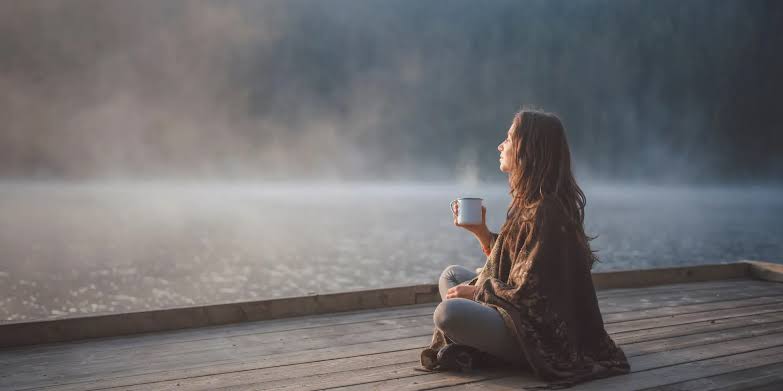
The practical application of slow living principles to an ordinary contemporary life does not require wholesale lifestyle transformation — it requires specific, deliberate choices about which aspects of daily life deserve the attention and the time that slow engagement provides. The meal that is prepared and eaten without screens or other simultaneous activities, the walk that is taken without earphones or a destination-focused pace, the conversation that receives full attention without the half-presence that phone availability in the pocket most consistently produces — each of these specific slow practices produces the quality of experience that the equivalent time spent in the fast mode most commonly does not.
Temporal landmarks — the transitions between activities, the beginning and end of the workday, the start of the weekend — are the natural points at which the transition from fast to slow mode is most accessible. The deliberate ritual that marks these transitions — the closing of the laptop and the preparation of a specific drink that signals the end of work, the morning practice that begins the day before checking any communications — creates the psychological boundary between modes that most effectively produces the shift in experience quality that slow living seeks. These rituals do not need to be elaborate; they need to be consistent enough that the body and the mind begin to associate the transition ritual with the mode shift, producing the automatic quality that reliable daily practices eventually achieve.
Slow Consumption: The Material Dimension
The consumer dimension of slow living focuses on the quality and the meaning of the things we acquire rather than the quantity and the convenience. The slow consumer buys fewer things but buys them with greater consideration — asking whether the specific item serves a genuine need or a genuine aesthetic pleasure, whether it is made with the quality that will outlast the impulse that motivated the purchase, and whether the production ethics of the item are consistent with the values that motivate the slow living orientation. This is not primarily a financial decision — slow consumption can coexist with both thrift shopping and premium purchasing — but a decision about the relationship between acquisition and satisfaction.
The practice of living with something for 30 days before purchasing it — or before replacing an existing item with a newer version — produces the perspective on whether the acquisition impulse represents a genuine need or a momentary want that the immediate purchase most commonly prevents. The slow consumer who knows the specific item they want, who has thought about where it will live in their home, how it will be used, and how it connects to the other things they own, is in a very different relationship with the acquisition than the one who purchases impulsively and discovers its relevance (or irrelevance) only after the purchase. This considered relationship with acquisition is the material dimension of the quality-over-quantity orientation that slow living most centrally represents.
Creating the Slow Life Practice That Fits Your Actual Life
The slow living practices that produce the most consistent benefit are the ones that are genuinely integrated into the specific life the practitioner is actually living rather than borrowed wholesale from a lifestyle aesthetic that does not fit their circumstances. The urban professional with young children has a different set of available slow practices than the retired couple in a rural community, and the attempt to transplant the latter’s practices into the former’s life most commonly produces frustration rather than the quality of experience that the slow living philosophy promises.
Identifying the specific moments and the specific activities in the current daily life where slow engagement is most immediately accessible — and where the quality of experience would most clearly improve from more deliberate, full-attention engagement — produces the personalised starting point that generic slow living advice cannot provide. The commute that currently disappears into a podcast might, with the deliberate change of a single headphone removal, become the observational, present-moment experience that provides genuine psychological recovery between the demands of work and home. The dinner preparation that currently happens with the television on might become the meditative engagement with sensory detail that the act of cooking can provide when given full attention. These specific, small changes to the relationship with existing activities are the slow living practices most immediately available to any ordinary life.